Hay fever and sleep are closely linked, and if you have hay fever you probably already know it. A stuffy, itchy nose and streaming eyes are hard enough by day, but at night they can keep you tossing, turning and staring at the ceiling. Waking up tired then makes the next day feel even harder.
The good news is that a few calm, everyday habits can lower how much pollen reaches your bedroom, so your nights feel gentler. This guide explains why hay fever disturbs sleep, a simple evening routine that helps, and where to turn for advice. None of it is medical advice — for anything about your symptoms or any medicine, a pharmacist or GP is the right person to ask.
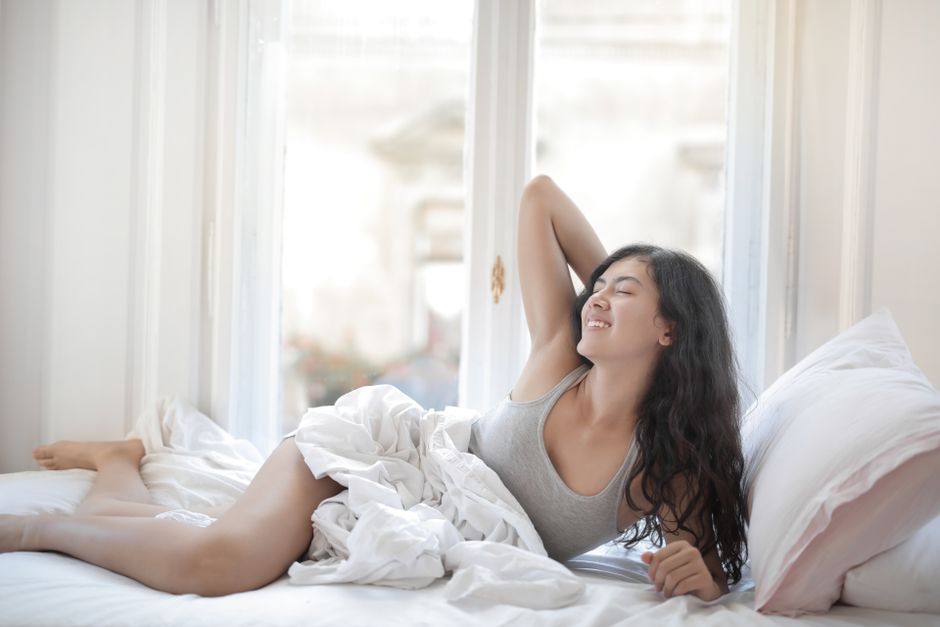
!A woman waking up rested and smiling in a bright, sunlit bedroom — managing hay fever and sleep is easier when less pollen reaches your room. A calmer bedroom means calmer nights in pollen season. Photo: Andrea Piacquadio / Pexels (Pexels Licence, free to use).
Key facts at a glance
- Hay fever symptoms include a runny or blocked nose, itchy, watery eyes and feeling tired (NHS).
- Allergy UK notes that hay fever symptoms can affect sleep quality, and long spells of poor sleep can raise the risk of other illnesses (Allergy UK).
- Symptoms are usually worse from late March to September, when it is warm, humid and windy and the pollen count is high (NHS).
- Grass pollen is the most common trigger, mostly from mid-May to July (Met Office).
- Some antihistamines can make you very sleepy — the NHS says to ask your pharmacist about non-drowsy options if you need them (NHS).
- There is no permanent solution for hay fever, but a pharmacist can advise and suggest ways to ease symptoms (NHS).
Hay fever and sleep: why nights feel worse
Hay fever and sleep clash because the symptoms peak at exactly the wrong time. A blocked or runny nose makes it harder to breathe lying down, itchy eyes make it harder to settle, and pollen carried in on your hair and clothes lingers on your pillow. Allergy UK notes that hay fever symptoms can affect sleep quality.
When you cannot breathe easily through your nose, you tend to mouth-breathe, which dries the throat and wakes you more often. Lighter, broken sleep is less restful even if you are in bed for the usual number of hours. That is why a night with hay fever can leave you feeling as though you barely slept at all.
There is a knock-on effect, too. Allergy UK points out that sustained periods of poor sleep can increase the risk of other illnesses, so a few rough nights in a row are worth taking seriously. Feeling wiped out is not you being dramatic — tiredness is a recognised part of hay fever.
Does hay fever make you tired?
Yes. Feeling tired is one of the symptoms the NHS lists for hay fever, alongside sneezing, a runny or blocked nose and itchy, red or watery eyes. Part of that tiredness comes from broken sleep, and part comes from the body's ongoing reaction to pollen through the day.
Two things stack up here. First, the disturbed nights described above leave you short on deep, restful sleep. Second, the constant low-level immune reaction to pollen is itself draining, which is why many people feel foggy and flat on high-pollen days even before bedtime. Understanding both halves helps you be kinder to yourself during the worst weeks.
What disrupts your sleep, and what can help
Most night-time hay fever comes down to pollen getting into the bedroom and onto you. The table below lines up the common culprits with a gentle step that may ease each one. It is a guide to experiment with, not a set of rules — do the few that fit your evening.
| What disrupts sleep | Why it happens | A gentle step that may help |
|---|---|---|
| Pollen on hair and skin | Carried in from outdoors and left on the pillow | Shower and wash your hair before bed |
| Open bedroom windows | Lets pollen drift in on warm evenings | Keep windows shut when the count is high |
| Washing dried outside | Bedding and pyjamas catch airborne pollen | Dry washing indoors in pollen season |
| Blocked, itchy nose | Harder to breathe lying down | Ask a pharmacist about suitable options |
| Not knowing the day ahead | Hard to plan a gentler evening | Check your local pollen level each day |
None of this has to be perfect. You cannot keep out every grain of pollen, and trying to would only add stress at bedtime. Picking two or three of these on the higher days usually makes the biggest difference to how you sleep.
A calm evening routine that lowers pollen
A short wind-down routine removes a lot of the pollen you carry indoors. The NHS suggests showering and changing your clothes after being outside to wash pollen off, keeping windows and doors shut when the count is high, and not drying washing outdoors, where it can catch pollen. Doing these in the evening means less pollen in bed with you.
Allergy UK gives very similar advice: once you are inside, shower, wash your hair and change your clothes to remove pollen, keep windows closed at home, and avoid line-drying clothes and linen outdoors. Washing your hair matters more than people expect, because pollen clings to it and then transfers straight onto your pillow.
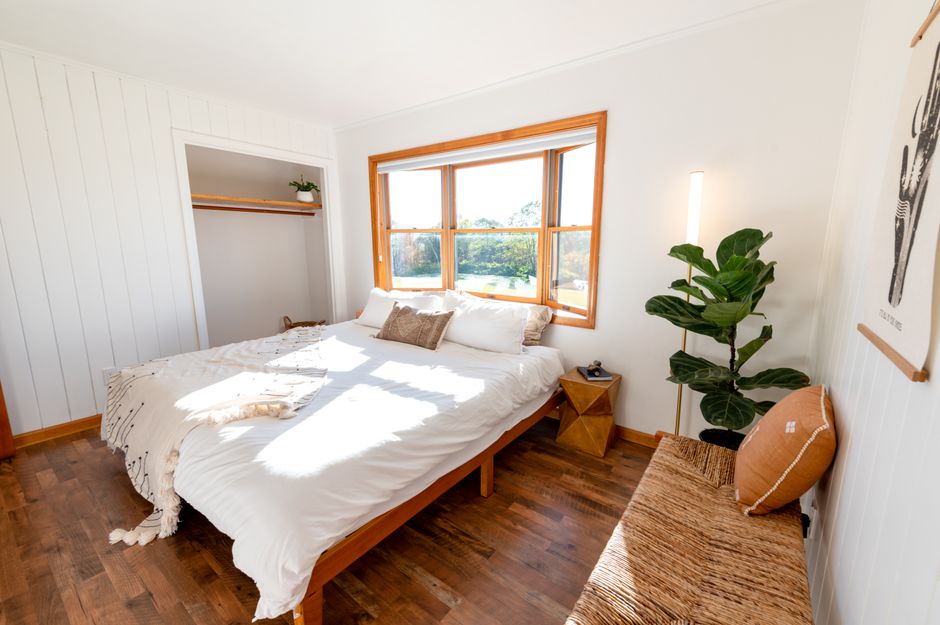
!A bright, airy bedroom with fresh white bedding and a window looking onto greenery. Fresh bedding and windows kept shut on high days help keep pollen out of the room. Photo: Andrea Davis / Pexels (Pexels Licence, free to use).
A couple of extra touches can help at night. The NHS suggests putting a little petroleum jelly around your nostrils to trap pollen before you breathe it in, and using a HEPA filter in your vacuum so hoovering the bedroom lifts pollen out rather than stirring it around. Washing bedding regularly during peak weeks keeps your pillow fresher, too.
Antihistamines and sleep
If symptoms are keeping you awake, a pharmacist can suggest suitable options. The NHS says a pharmacist can give advice and recommend treatments such as antihistamine drops, tablets or nasal sprays, and steroid nasal sprays, to help ease symptoms. A pharmacist can talk through what suits you.
There is one detail worth knowing. The NHS notes that some antihistamines can make you very sleepy, so it advises speaking to your pharmacist about non-drowsy antihistamines if you need them — for example, if you have to drive or concentrate the next day. Which type is right for you is a question for the pharmacist, not something to guess at, so do ask before you change anything.
When to see a pharmacist or GP
Speak to a pharmacist if your symptoms are stubborn, disturbing your sleep night after night, or getting in the way of daily life. As the NHS explains, they can suggest treatments suitable for you and point you to the right next step. A quick conversation at the pharmacy counter is often all it takes.
See a GP if your symptoms are severe, do not ease with the usual steps, or if you have asthma that seems to be getting worse in the pollen season. A GP can look at the fuller picture with you. PEPA is here for the everyday picture — what the pollen is doing where you live — not to replace that conversation.
What you can do tonight
Tonight, you can start with three easy things: check your local pollen level, have a shower and wash your hair before bed, and keep the bedroom window shut if the count is high. Each one removes a little pollen and can take the edge off a restless night.
From there, add a gentle rhythm that suits you. Drying washing indoors during peak weeks, keeping fresh bedding on the bed, and a dab of petroleum jelly around the nostrils all help lower the pollen around you while you sleep. If nights stay hard, a pharmacist is your best next stop.
!A woman sleeping peacefully in a bright bed with soft white bedding. Small evening habits add up to calmer, more restful nights. Photo: Kampus Production / Pexels (Pexels Licence, free to use).
In short
Hay fever and sleep pull against each other: a blocked nose and itchy eyes make rest harder, and broken sleep leaves you tired the next day. Showering before bed, washing your hair, keeping windows shut and drying washing indoors all lower the pollen in your bedroom. If nights stay difficult, a pharmacist can suggest suitable options — and can point you to non-drowsy antihistamines if you need to be sharp the next day.
See your local pollen picture today
Resting better in pollen season is easier when you know what the pollen is actually doing where you live. PEPA gives you a calm, local view of the day ahead and lets you note how you feel over time, with no account to set up and nothing to share.
Frequently asked questions
Why is my hay fever worse at night?
At night, pollen carried in on your hair, skin and clothes settles on your pillow and bedding, and a blocked nose is harder to cope with lying down. Warm evenings with windows open let more pollen drift in. Showering before bed and keeping windows shut on high days can help, as the NHS and Allergy UK both suggest.
Does hay fever make you tired?
Yes. The NHS lists feeling tired as a symptom of hay fever. Part of the tiredness comes from broken, restless sleep, and part comes from your body's ongoing reaction to pollen through the day. Allergy UK also notes that hay fever can affect sleep quality, which adds to that worn-out feeling.
Should I shower before bed if I have hay fever?
It can help. Both the NHS and Allergy UK suggest showering and washing your hair after being outdoors to remove pollen. Doing this in the evening means less pollen is transferred onto your pillow overnight, which may make it easier to breathe and settle when you have hay fever.
Can antihistamines help me sleep with hay fever?
A pharmacist is the right person to ask. The NHS says a pharmacist can suggest suitable treatments, including antihistamine tablets, drops or nasal sprays. It also notes that some antihistamines can make you very sleepy, so ask about non-drowsy options if you need to drive or concentrate the next day.
Should I keep my bedroom window open or closed in hay fever season?
The NHS and Allergy UK both advise keeping windows and doors shut when the pollen count is high, as open windows let pollen drift indoors. On lower-pollen days, or after rain has cleared the air, airing the room may feel fine — checking your local pollen level helps you decide.
Read next
References
- The NHS lists hay fever symptoms as sneezing and coughing, a runny or blocked nose, itchy, red or watery eyes, an itchy throat, and feeling tired. — NHS, Hay fever. Source (checked 2026-07-23).
- The NHS says hay fever symptoms are usually worse between late March and September, especially when it is warm, humid and windy and the pollen count is high, and that hay fever can last for weeks or months, unlike a cold which usually goes after one to two weeks. — NHS, Hay fever. Source (checked 2026-07-23).
- The NHS advises showering and changing clothes after being outside to wash pollen off, keeping windows and doors shut when the pollen count is high, not drying clothes outside, wearing wraparound sunglasses, using a HEPA filter when vacuuming, and putting petroleum jelly around the nostrils to trap pollen. — NHS, Hay fever. Source (checked 2026-07-23).
- The NHS states there is currently no permanent solution for hay fever and it cannot be prevented, but a pharmacist can give advice and suggest treatments such as antihistamine drops, tablets or nasal sprays and steroid nasal sprays, and adds that some antihistamines can make you very sleepy, so ask a pharmacist about non-drowsy antihistamines if you need to. — NHS, Hay fever. Source (checked 2026-07-23).
- The Met Office says most people are allergic to grass pollen, the most common cause of hay fever, with the grass pollen season running from mid-May until July, and that warm, dry days with low humidity and a gentle breeze produce the highest pollen counts. — Met Office, When is hay fever season in the UK?. Source (checked 2026-07-23).
- Allergy UK notes that hay fever symptoms can affect sleep quality and that sustained periods of poor sleep can increase the risk of other illnesses, and advises showering, washing your hair and changing clothes once indoors, keeping windows closed, and avoiding line-drying clothes and linen outdoors. — Allergy UK, Hay fever help. Source (checked 2026-07-23).
Image credits
- Photo by Andrea Piacquadio on Pexels.
- Photo by Andrea Davis on Pexels.
- Photo by Kampus Production on Pexels.
PEPA shares general lifestyle information only. It is not medical advice, and it does not replace guidance from a pharmacist or GP. Please speak to them about your symptoms or any health concerns.