Hay fever in children is very common, and it can be hard to spot at first. Your child may sneeze, rub their eyes and feel tired and irritable on warm, breezy days. It can look a lot like a cold. The good news is that a few calm, everyday habits can make the pollen season feel much easier.
This guide is gentle and practical. It explains what hay fever in children looks like, why it happens, and the small steps that help at home and before school. None of it is medical advice — for anything about your child's symptoms, or any medicine, a pharmacist or GP is the right person to ask.
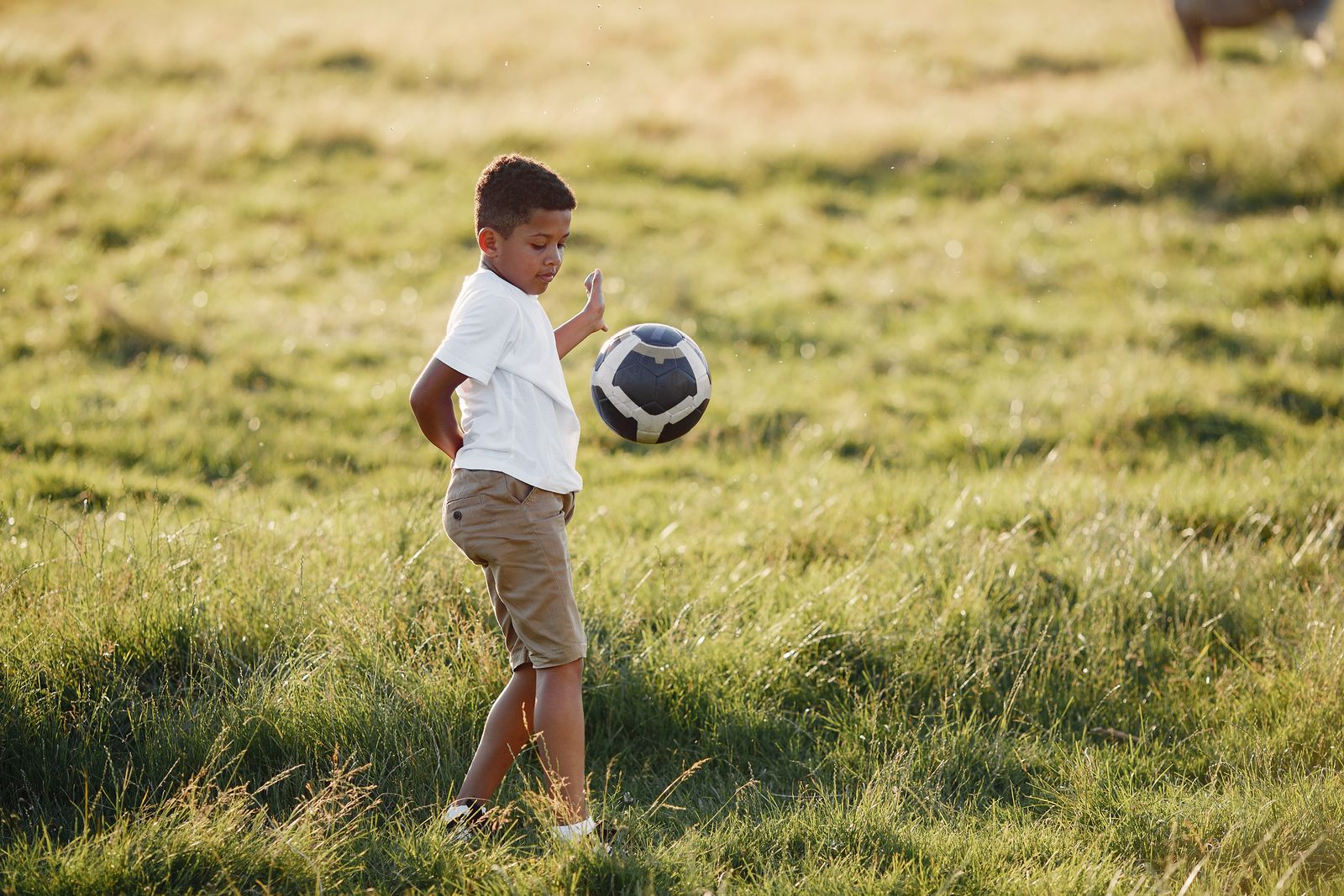
!A young boy playing football in a sunlit grassy meadow; grass pollen is a common cause of hay fever in children. Grass pollen peaks in summer — a common trigger for hay fever in children. Photo: Pexels (Pexels Licence, free to use).
Key facts at a glance
- Hay fever can start at any age, and it often appears in the childhood or teenage years (Allergy UK).
- Common signs are sneezing, an itchy or runny nose, and itchy, red or watery eyes (NHS).
- Symptoms are usually worse on warm, humid, breezy days when the pollen count is high (NHS).
- Grass pollen is the most common trigger, mostly from mid-May to July (Met Office).
- Hay fever can affect a child's sleep, mood and concentration, including during summer exams (Allergy UK).
- There is no permanent solution, but a pharmacist can advise and suggest ways to ease symptoms (NHS).
What is hay fever in children?
Hay fever in children is an allergy to pollen — a fine powder released by grasses, trees and weeds. When pollen touches the eyes, nose or throat, the body reacts as if it were a threat. This brings on sneezing, an itchy nose and red, watery eyes, mostly in spring and summer.
It is one of the most common allergies in childhood. Because the symptoms come and go with the weather and the seasons, they can be puzzling at first. Many parents assume it is a lingering cold before they notice the pattern.
Hay fever is not dangerous in itself, but it can be genuinely miserable for a child. Understanding what is happening is the first calm step, so you can help your child feel more comfortable through the pollen months rather than simply putting up with it.
Why do children get hay fever?
Children get hay fever when their immune system reacts to harmless pollen as if it were a threat. It often runs in families, so a child with a parent who has allergies, asthma or eczema is more likely to have it too. Hay fever frequently starts in the school years and can change with age.
The main trigger in the UK is grass pollen, which is highest from mid-May to July, according to the Met Office. Tree pollen comes earlier in spring, and weed pollen later into autumn, so a child's worst weeks depend on which pollen they react to.
!Tall summer grasses and blue cornflowers in a green meadow, a source of the grass pollen behind many children's symptoms. Grasses release most of their pollen from late spring through summer. Photo: Pexels (Pexels Licence, free to use).
Weather matters too. Warm, dry, breezy days lift pollen into the air, while rain can wash it out for a while. This is why your child may seem fine one day and struggle the next, even in the same week.
Is it hay fever or a cold?
Colds and hay fever can look alike, but there are helpful clues. Hay fever tends to bring itchy eyes, lasts for weeks while pollen is high, and comes with clear, runny mucus. A cold often brings a mild temperature and aches, thicker mucus, and usually clears within one to two weeks.
The table below sums up the everyday differences. It is a guide, not a test — if you are unsure, a pharmacist can help you work out what is going on.
| Sign | More like hay fever | More like a cold |
|---|---|---|
| Itchy eyes | Common | Unusual |
| Temperature | No | Sometimes mild |
| How long it lasts | Weeks, while pollen is high | Around 1–2 weeks |
| Mucus | Clear and runny | Thicker, may turn yellow |
| When it happens | Warm, dry, breezy days | Any time of year |
The NHS notes that hay fever can last for weeks or months, unlike a cold, which usually goes away after one to two weeks. That timing is often the clearest clue of all.
How hay fever affects children day to day
Day to day, hay fever can leave children tired, itchy and unable to settle. A blocked nose and broken sleep can affect mood, concentration and school work, and Allergy UK notes this can matter most during summer exams. Spotting your child's worst times and triggers helps you plan gentler days around them.
Sleep is often the first thing to suffer. Pollen that settles on bedding, and a stuffy nose at night, can make it harder to drop off and stay asleep. A tired child is more likely to feel low, restless or tearful the next day.
Play and sport can be affected too. Long spells on grass — football, sports day, playing in the park — mean more contact with the very pollen that sets symptoms off. That does not mean keeping your child indoors; it means being a little thoughtful about timing and a quick clean-up afterwards.
Gentle steps that can help at home
A few simple habits lower how much pollen reaches your child. Wraparound sunglasses and a wide-brimmed hat keep pollen away from the eyes and hair. Wiping their face and hands, and changing clothes after playing outside, removes pollen they carry in. Keeping bedroom windows shut on high days helps them rest.
The NHS suggests several easy measures: shower and change clothes after being outside to wash pollen off, keep windows and doors shut when the count is high, and avoid drying washing outdoors, where it can catch pollen. A little petroleum jelly around the nostrils can also help trap pollen before it is breathed in.
!A parent and child walking hand in hand through a sunny green park on a summer day. Small everyday habits — sunglasses, a hat, and a wipe-down after play — make outings easier. Photo: Pexels (Pexels Licence, free to use).

None of this needs to be perfect. You cannot keep every grain of pollen off a busy child, and trying to would be exhausting for you both. Doing a few of these things on the higher days usually makes the biggest difference to how your child feels.
When to see a pharmacist or GP
If your child's symptoms are stubborn, disturbing their sleep, or getting in the way of school and play, speak to a pharmacist. As the NHS explains, a pharmacist can give advice and suggest treatments suitable for your child, such as antihistamine drops, tablets or nasal sprays for the right age.
See a GP if your child's symptoms are severe, do not ease with the usual steps, or if your child has asthma that seems to be getting worse in the pollen season. A GP can look at the fuller picture and talk through the options with you.
PEPA is here for the everyday picture — what the pollen is doing where you live — not to replace that conversation. Anything about your child's health, symptoms or medicine belongs with a pharmacist or GP, who know your child.
What you can do today
Today, you can start with three easy things: check your local pollen level, send your child out with sunglasses and a hat on high days, and wipe them down and change their clothes when they come back in. Each one removes a little pollen and can take the edge off.
From there, add a gentle rhythm that suits your family. Washing your child's hair before bed on high days, keeping bedroom windows shut, and drying washing indoors all help lower the pollen around them at night, when good sleep matters most.
If you are ever unsure, or your child seems really uncomfortable, please speak to a pharmacist or GP. There is no permanent solution for hay fever, and it cannot be prevented, but the right support can make your child's summer feel a great deal kinder.
In short
Hay fever in children is common, usually driven by grass pollen, and often mistaken for a cold at first. Watch for itchy eyes and symptoms that last for weeks. Sunglasses, a hat, a quick wash after play and shut bedroom windows all help. For stubborn symptoms, a pharmacist or GP is your best guide.
See your local pollen picture today
Helping your child with hay fever is easier when you know what the pollen is actually doing where you live. PEPA gives you a calm, local view of the day ahead and lets you note how your child feels over time, with no account to set up and nothing to share.
Frequently asked questions
At what age can children get hay fever?
Hay fever can start at any age, but it often appears during the childhood or teenage years, according to Allergy UK. Some children show signs early on, while others develop it later. If you notice a seasonal pattern of sneezing and itchy eyes, it is worth mentioning to a pharmacist.
How can I tell if my child has hay fever or a cold?
Hay fever usually brings itchy eyes, clear runny mucus and symptoms that last for weeks while pollen is high. A cold more often brings a mild temperature and aches, thicker mucus, and clears within one to two weeks. If you are unsure, a pharmacist can help you tell them apart.
Can hay fever affect my child's sleep and schoolwork?
Yes. A blocked nose and itchy eyes can make it harder for a child to fall asleep and stay asleep, and a tired child may struggle to concentrate. Allergy UK notes this can matter especially during summer exams. Gentle steps at night, like washing hair before bed, can help.
What can I do to ease my child's hay fever at home?
The NHS suggests wraparound sunglasses and a hat outdoors, showering and changing clothes after being outside, keeping windows shut on high days, and not drying washing outdoors. Wiping your child's face and hands after play, and washing their hair before bed, also removes pollen they carry in.
Do sunglasses really help children with hay fever?
They can help. Wraparound sunglasses form a simple barrier that keeps some pollen out of the eyes, which may ease the itching and watering many children find most annoying. Paired with a wide-brimmed hat, they also keep pollen off the face and hair during time outside.
When should I see a pharmacist or GP about my child's hay fever?
Speak to a pharmacist if your child's symptoms are stubborn, affecting their sleep, or getting in the way of school and play; they can suggest suitable options. See a GP if symptoms are severe, do not ease, or your child's asthma seems to be getting worse in the pollen season.
Read next
References
- The NHS lists hay fever symptoms as sneezing and coughing, a runny or blocked nose, itchy, red or watery eyes, an itchy throat, and feeling tired. — NHS, Hay fever. Source (checked 2026-07-22).
- The NHS says hay fever symptoms are usually worse between late March and September, especially when it is warm, humid and windy and the pollen count is high, and that hay fever can last for weeks or months, unlike a cold which usually goes after one to two weeks. — NHS, Hay fever. Source (checked 2026-07-22).
- The NHS advises wearing wraparound sunglasses and a wide-brimmed hat, showering and changing clothes after being outside, keeping windows and doors shut when the pollen count is high, not drying clothes outside, and putting petroleum jelly around the nostrils to trap pollen. — NHS, Hay fever. Source (checked 2026-07-22).
- The NHS states there is currently no permanent solution for hay fever and it cannot be prevented, but a pharmacist can give advice and suggest treatments such as antihistamine drops, tablets or nasal sprays to help ease symptoms. — NHS, Hay fever. Source (checked 2026-07-22).
- The Met Office says grass pollen is the most common cause of hay fever, with the grass pollen season typically running from mid-May to July, and that pollen levels are strongly influenced by the weather. — Met Office, Pollen. Source (checked 2026-07-22).
- Allergy UK notes that hay fever often develops in childhood or the teenage years and can affect children's sleep, concentration and performance at school, including during summer exams, and suggests simple steps such as wraparound sunglasses and washing pollen off after being outdoors. — Allergy UK, Hay fever help. Source (checked 2026-07-22).
Image credits
- Photo by Sergey Terentyev on Pexels.
- Photo by Irina Iriser on Pexels.
- Photo by Barbara Olsen on Pexels.
PEPA shares general lifestyle information only. It is not medical advice, and it does not replace guidance from a pharmacist or GP. Please speak to them about your symptoms or any health concerns.